Insulating Firebrick
That Cuts Your Fuel Bill
Lightweight alumina-silicate firebrick (IFB) engineered for thermal insulation — not load-bearing. 70% lower thermal conductivity than dense firebrick, with the same temperature rating. Cut furnace fuel costs 30–40% with proper lining design.
Dense Brick Alone Is Burning Your Fuel Budget
30–50% Fuel Waste
Dense firebrick furnace walls lose 30–50% of heat through conduction. IFB backup lining can cut this by half — directly reducing fuel consumption per ton of product. (Energy audit data)
$200K+/Year Extra
Typical fuel cost increase for a 1200°C heat treatment furnace using only dense brick vs. IFB backup lining. Payback period for IFB upgrade: 8–14 months. (Furnace operator case)
Shell Overheating
Dense brick alone allows furnace shell to reach 250–350°C, requiring external cooling. IFB keeps shell at 80–120°C — safer for operators, less thermal stress on steel. (Thermal imaging)
Wrong IFB = Collapse
IFB is NOT load-bearing. Using it in compression zones (arch spans, hearth) causes catastrophic failure within weeks. Correct zone specification is critical. (Field failure reports)
Dense Brick Alone Is Wasteful.
IFB Alone Collapses. The Answer Is Layered.
A properly engineered furnace lining uses three layers: dense brick for hot face wear, IFB for thermal barrier, and safety layer to protect the shell. Each layer has a specific job.
Layered lining saves 30–40% fuel vs. single-layer dense brick. Request a lining design for your furnace →
Why Each Layer Matters
Where IFB Backup Saves the Most
Not All IFB Is Created Equal
IFB performance depends on density control, dimensional accuracy, and porosity consistency. Variance here causes heat leakage through gaps or uneven insulation. Here's how suppliers compare:
IFB Series — Insulating Firebrick
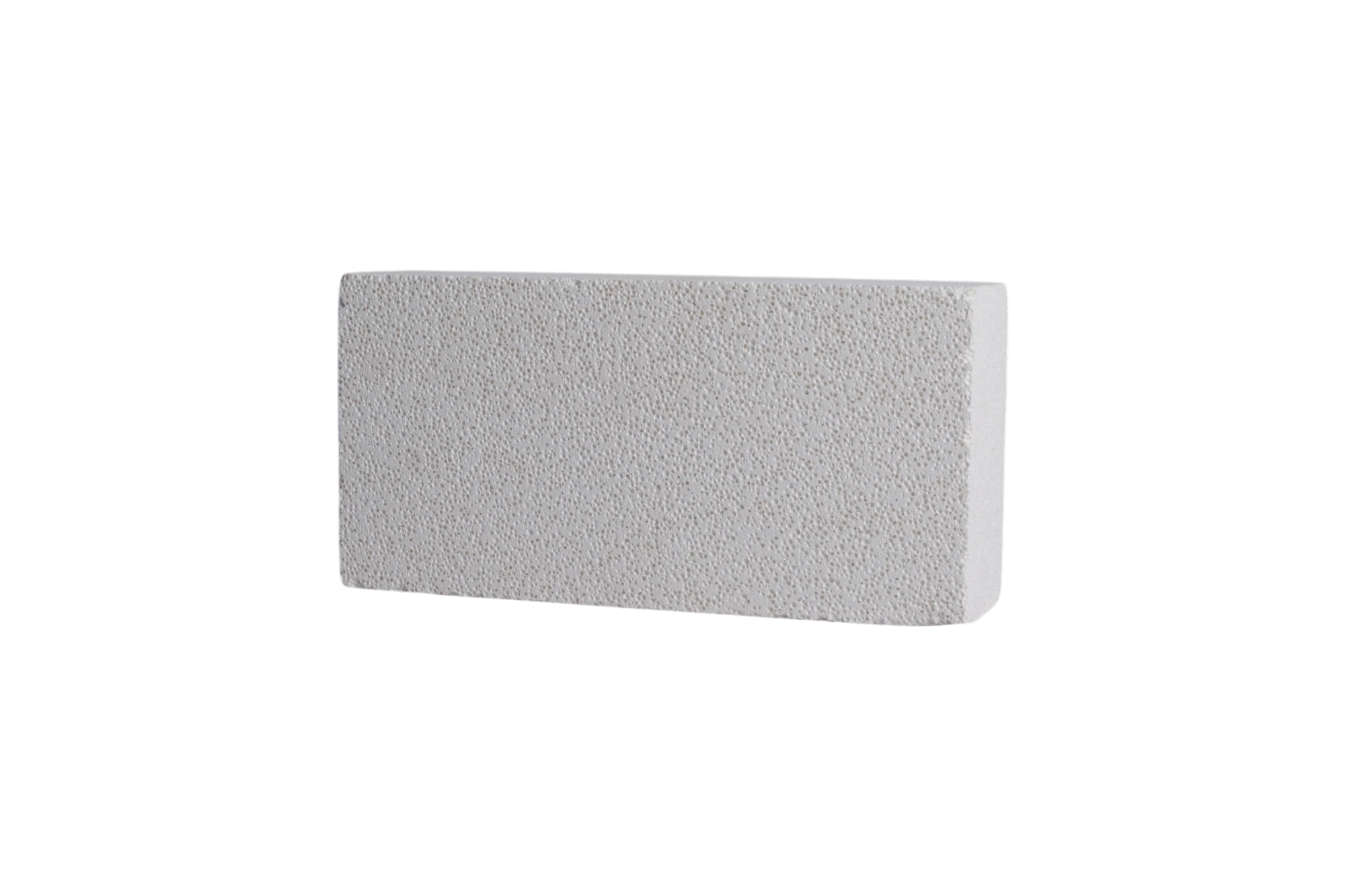
Lightweight Alumina-Silicate Insulation Brick
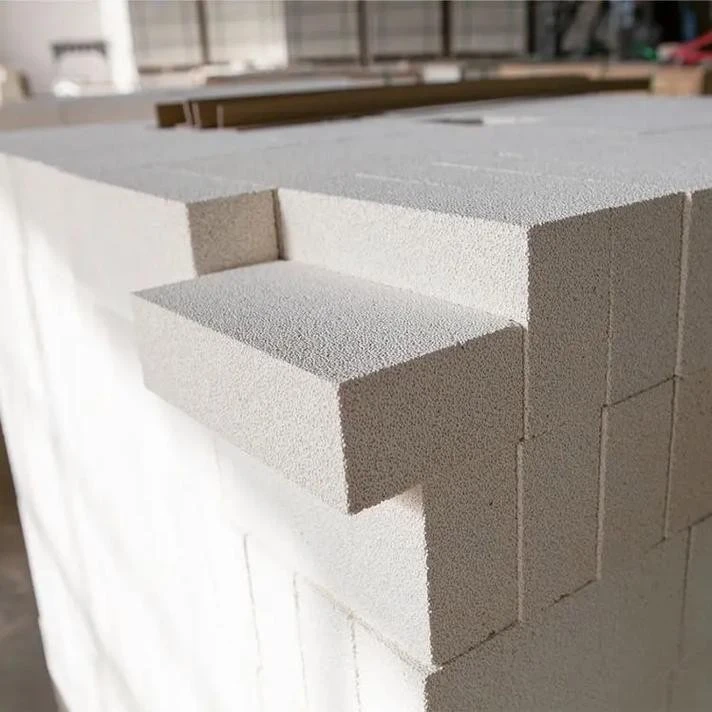
High-porosity (65–75%) insulating firebrick designed for backup lining and thermal barrier applications. NOT for direct slag contact or load-bearing zones. Lower density = lower thermal conductivity = better insulation.
| Grade | Density | Porosity | CCS | Max Temp | λ* | Typical Use |
|---|---|---|---|---|---|---|
| IFB-23 | 0.6 g/cm³ | 75% | ≥2.5 MPa | 1260°C | 0.26 | Safety layer, low-temp backup |
| IFB-26 | 0.75 g/cm³ | 72% | ≥3.5 MPa | 1430°C | 0.32 | Heat treatment furnace backup |
| IFB-28 | 0.9 g/cm³ | 70% | ≥5.0 MPa | 1540°C | 0.40 | Forging furnace, kiln backup |
| IFB-30 | 1.05 g/cm³ | 68% | ≥6.5 MPa | 1650°C | 0.50 | High-temp kiln insulation |
| IFB-32 | 1.20 g/cm³ | 65% | ≥8.0 MPa | 1760°C | 0.65 | Critical hot zone backup |
* λ = Thermal Conductivity (W/m·K) at mean temperature. Lower = better insulation.
Standard sizes: 230×114×65mm (9"×4.5"×2.5") · 230×114×76mm · Custom sizes for large projects (MOQ 10 tons)
Compliance: ASTM C155 · GB/T 3994 · ISO 2245
vs. dense firebrick at same temperature rating
IFB-32 grade for critical hot zone backup
Tight fit minimizes heat leakage through gaps
Fuel savings ROI for IFB lining upgrade
Before the Brand
Came the Kiln Line.
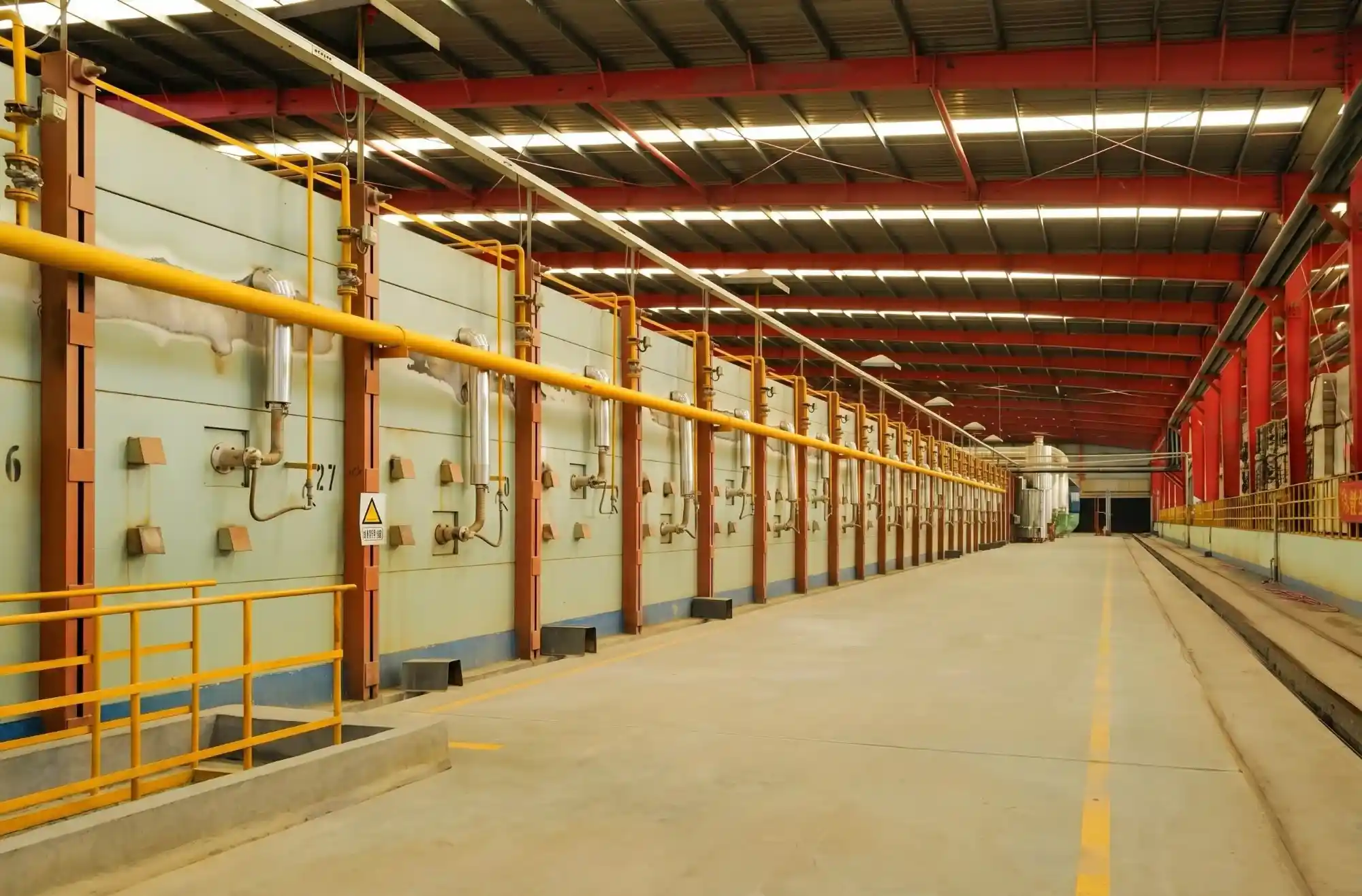
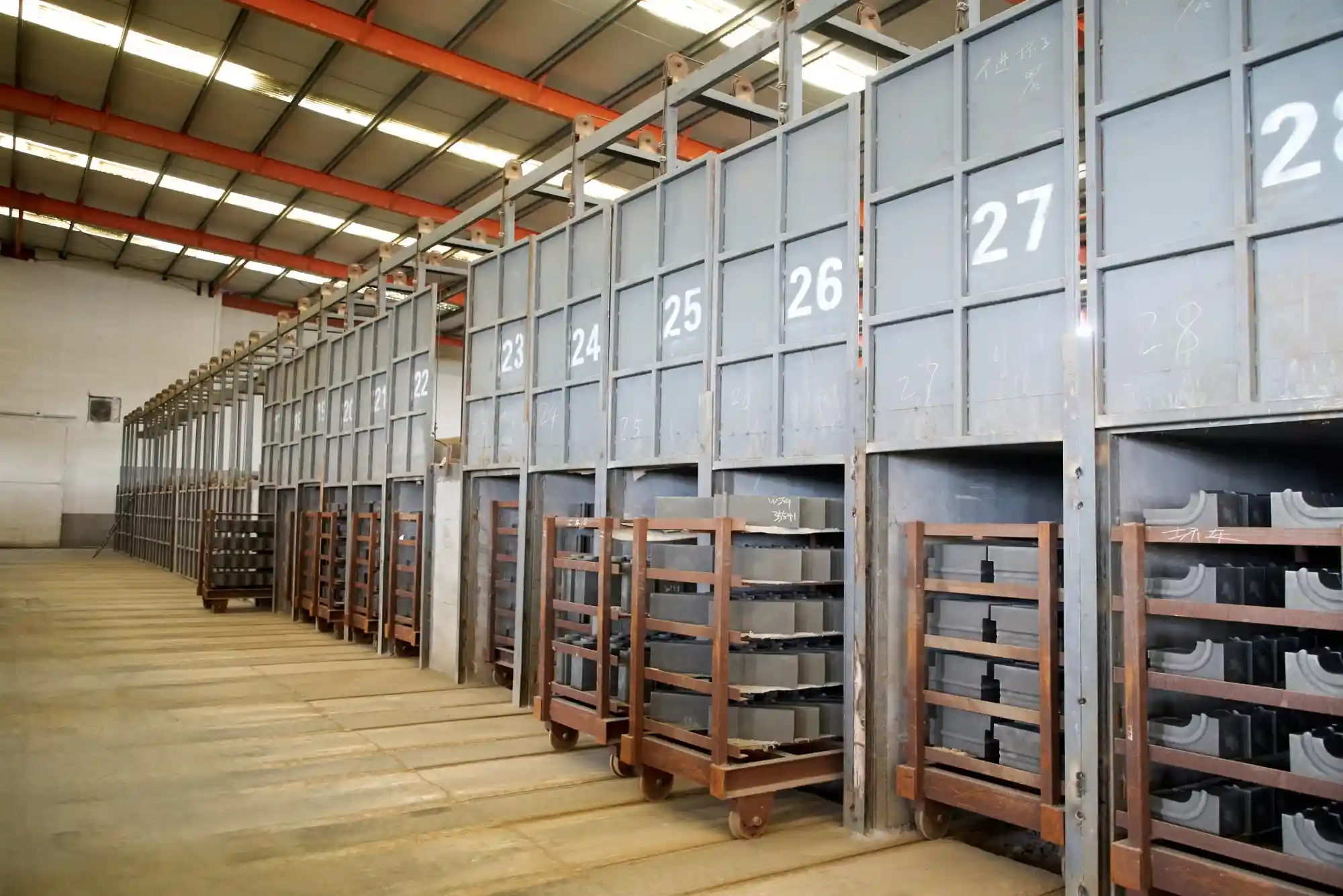
Vuulcan Refractories was founded by a team that grew up inside Zibo's refractory manufacturing industry. We did not enter refractories from the market side — we entered the market from inside the industry. Our experience began on production lines, beside kilns, raw material systems, and quality control laboratories. Over 20 years of manufacturing experience shaped how we evaluate materials, select production partners, and engineer refractory systems for demanding thermal environments.
Insulating firebrick production requires a different discipline from dense brick — controlled porosity, precise lightweight aggregate ratios, and firing regimes optimised for thermal insulation rather than mechanical strength. Zibo's refractory cluster developed IFB capability alongside its dense brick lines, leveraging the same raw material infrastructure and kiln systems. Our selection of IFB production partners is based on insider knowledge — understanding which facilities achieve consistent porosity control, dimensional accuracy, and reliable classification temperature performance.
Today, Vuulcan operates as a cluster-backed brand — matching each application to the right production partner within Zibo's qualified manufacturing network. Vuulcan owns the engineering interface and quality oversight. The cluster provides the manufacturing depth.

Credentials That Follow Every Shipment
Every IFB order from Vuulcan includes density verification, porosity testing, and dimensional inspection per ASTM C155 — so your QA team knows exactly what's going into the lining.
From Inquiry to Delivered IFB — 4 Steps
Inquiry & Scoping
Share your furnace type, operating temperature, current lining, and energy concerns. We respond within 6 hours.
Lining Design
Our engineer reviews your furnace and recommends a 3-layer architecture: hot face material, IFB backup grade, and safety layer specification.
Sample & Validation
Sample bricks shipped for your inspection. Full COA with density, porosity, CCS, and thermal conductivity data included.
Production & Delivery
Cluster-direct production from Zibo with dimensional inspection. Full containers shipped FOB Qingdao or CIF destination with batch COA.
Insulating Firebrick Is One Layer of the Solution
IFB provides the thermal barrier — but the hot face needs zone-specific castable, and the outer shell needs fiber insulation. Vuulcan engineers all three layers together.
Low Cement Castable
Zone-mapped LCC and ULCC for cement rotary kilns. Al₂O₃ 60–90%. The structural core your IFB backup sits behind.
View LCC SpecificationsCeramic Fiber Blanket
1260–1430°C rated fiber blanket for the outermost insulation layer. 92% lighter than IFB — the energy-saving complement.
View CFB SpecificationsTell Us About Your Furnace
Share your furnace specification and we will respond within 6 hours with a lining design recommendation and FOB pricing.